
Compostable Branded Food Containers for Catering Companies: The Complete Guide
Discover how catering companies across Australia can use compostable branded food containers to reduce waste and boost brand visibility.

Written by
Isla Martinez
Eco & Sustainable Products
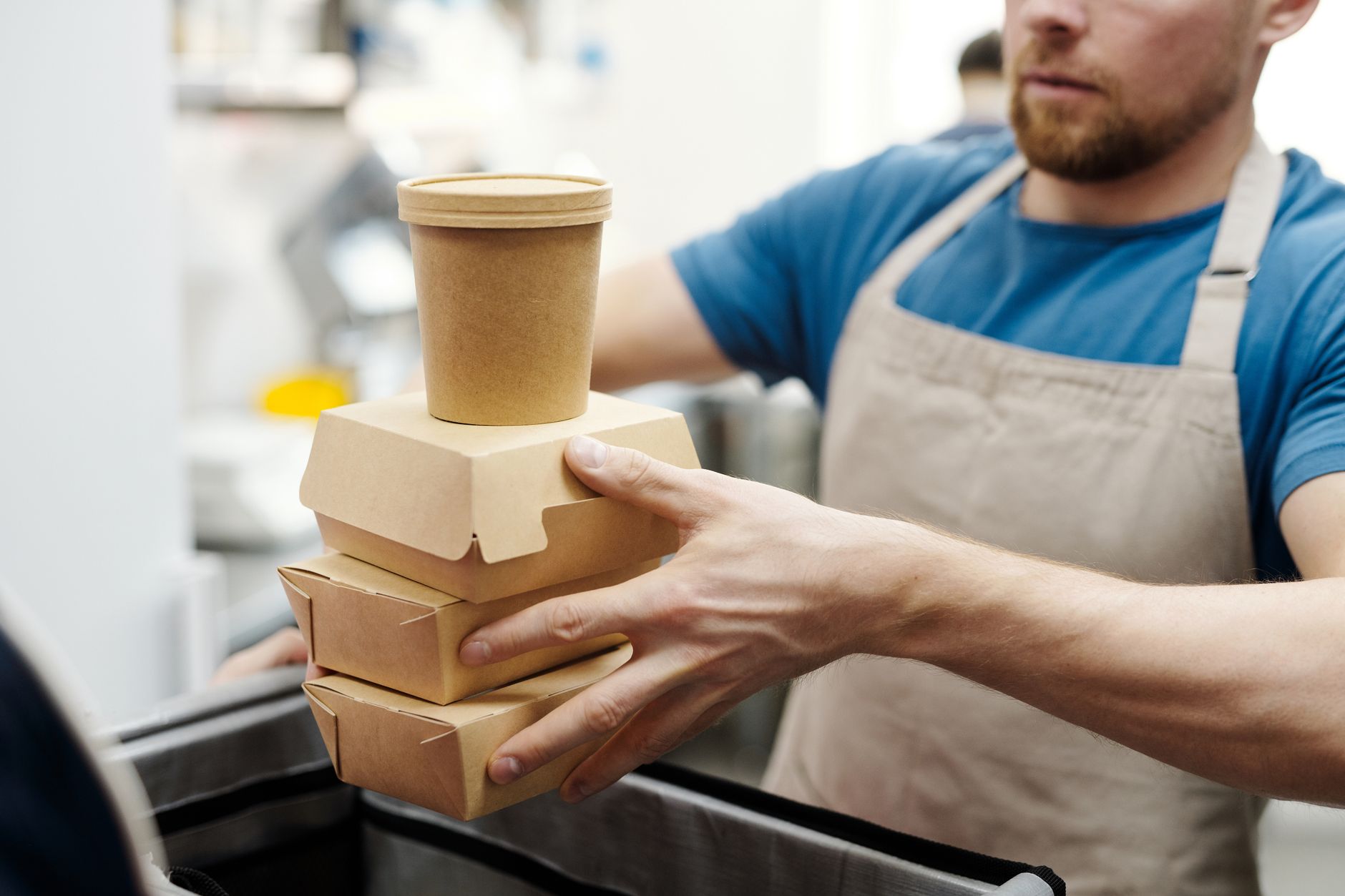
Catering is a business where first impressions are edible — but your brand impression doesn’t have to disappear the moment the meal is finished. For catering companies across Australia, the shift toward compostable branded food containers is no longer just a feel-good environmental choice. It’s a smart business decision that aligns your brand with the values your clients actually care about in 2026. Whether you’re servicing corporate lunches in Sydney’s CBD, wedding receptions on the Gold Coast, or festival food stalls in Melbourne, the packaging you choose says just as much about your business as the food inside it.
Why Compostable Branded Food Containers Are Having a Moment in Australia
The Australian food service industry is under increasing pressure — from governments, councils, clients, and consumers alike — to move away from single-use plastics and conventional disposables. State-level bans on single-use plastics have rolled out progressively across Queensland, New South Wales, Victoria, South Australia, Western Australia, and the ACT. For catering businesses, this isn’t just regulatory noise. It’s reshaping procurement decisions at every level.
Compostable food containers — made from materials like sugarcane bagasse, PLA (polylactic acid), kraft paperboard, cornstarch, and bamboo fibre — break down in commercial composting conditions within 90 to 180 days. Unlike conventional plastic containers that linger in landfill for centuries, compostable alternatives return to the earth. And when you brand them well, they also do a job for your marketing before they decompose.
The broader shift is reflected in current Australian promotional products market trends, where sustainability is consistently one of the top purchasing drivers for corporate and event buyers. Clients sourcing catering services are increasingly asking questions about packaging and waste management as part of their vendor selection process. Having a clear, branded, compostable solution ready to showcase puts you ahead of that conversation.
What Materials Are Used for Compostable Branded Food Containers?
Understanding your material options helps you match the right container to the right catering context — and brief your supplier accurately when it comes to branding.
Sugarcane Bagasse
Bagasse is the fibrous residue left after sugarcane juice is extracted, making it a genuine agricultural by-product rather than a purpose-grown resource. It’s one of the most popular materials for compostable food containers in Australia because it handles hot and cold foods well, is oil and water resistant, and has a clean, sturdy appearance. Bowls, trays, clamshells, and plates are all commonly produced in bagasse. It accepts branding via digital print or custom-moulded labelling, though most catering companies apply branding through a custom-printed wrap or sleeve rather than directly on the container itself.
PLA-Lined Paperboard
Paperboard containers lined with PLA (a plant-based bioplastic derived from corn starch) offer excellent printability for branding. The outer kraft or white paperboard surface is ideal for full-colour digital printing, which means you can achieve detailed logos, colour backgrounds, and brand messaging with relative ease. Cups, noodle boxes, burger boxes, and sandwich containers are frequently made this way. The key caveat: PLA-lined products need to be processed at a certified commercial compost facility — they won’t break down in your home compost bin.
Bamboo Fibre
Bamboo grows rapidly without pesticides or irrigation, making it one of the most sustainable raw materials available. Bamboo fibre containers are durable, naturally antibacterial, and have a premium look and feel that suits high-end catering events. They’re particularly well-suited to corporate functions and branded hospitality experiences where aesthetics matter. You can read more about how recycled and sustainable materials are shaping branded merchandise in Australia to understand how bamboo fits into the broader eco-product landscape.
Cornstarch and CPLA
Cornstarch-derived materials are commonly used for cutlery, lids, and smaller accessories within a compostable packaging range. If you’re building a fully compostable catering kit, matching your containers with compostable cutlery from the same material family ensures consistent branding and end-of-life processing.
Branding Options for Compostable Food Containers
This is where things get genuinely exciting for catering businesses. The perception that eco-friendly packaging means plain, unbranded packaging is outdated. In 2026, there are strong branding options available — you just need to know which methods suit which materials.
Digital Printing on Paperboard
For paperboard-based containers (cups, boxes, bags, wraps), digital printing is the go-to method. It delivers vibrant full-colour output with no minimum screen requirement, making it suitable even for shorter runs. If you want to explore decoration methods in more depth, our quality guide to screen printing for promotional products explains how different print techniques compare when applied to varied substrates.
Custom Sleeves and Labels
For bagasse and moulded fibre containers, a custom-printed paper sleeve or wraparound label is a practical and cost-effective branding solution. This also gives you flexibility — the core container can be ordered in bulk and kept in inventory, while you apply event-specific or client-specific labels as needed. If you’re managing large stock volumes, these warehouse storage tips for bulk promotional merchandise are worth reading before you take delivery of a major container order.
Embossing and Debossing on Premium Products
For higher-end bamboo or moulded products used at premium events, embossing or debossing a logo into the material itself creates a tactile brand impression that feels genuinely premium. It’s more expensive and typically requires higher minimum order quantities (MOQs of 500 to 1,000 units are common), but the result is a branded product that elevates the whole catering experience.
Practical Considerations When Ordering Compostable Branded Containers
Before you contact a promotional products supplier to place your first order, there are several practical factors to work through.
Minimum Order Quantities and Lead Times
Compostable branded containers typically start at MOQs of 250 to 500 units for digitally printed paperboard products, and 500 to 1,000 units for custom-moulded or embossed items. Lead times for domestically stocked and branded items run around 10 to 15 business days, while custom-manufactured orders from overseas production may require 6 to 10 weeks. If you have an urgent event requirement, check whether same-day or rapid-turnaround print services can accommodate food-safe labels or sleeves as a short-term solution.
Certifications to Look For
Not all products marketed as “compostable” are created equal. When briefing your supplier, ask specifically for products certified to:
- AS 4736 — the Australian standard for industrial/commercial compostable packaging
- AS 5810 — the standard for home compostable products (if relevant to your operations)
- BPI (Biodegradable Products Institute) — a widely recognised international certification
Reputable suppliers should be able to provide certification documentation on request. This matters not only for genuine environmental outcomes but also for claims you make in your own marketing.
Food Safety Compliance
Branded containers that come into contact with food must comply with Australian food contact material standards. Inks and coatings used in printing must be food-safe. Always confirm this with your supplier before finalising artwork, particularly if containers will hold hot, oily, or acidic foods.
Budget Planning
Compostable containers carry a cost premium over conventional plastic or polystyrene packaging — typically 20 to 40 per cent higher per unit. However, that cost gap has narrowed significantly as demand has scaled. When calculating true cost, factor in the marketing value of a branded, premium-looking container alongside the risk mitigation of regulatory compliance. For practical guidance on measuring return on investment from branded products, this Australian promotional products ROI data is a useful reference point.
Best Use Cases for Catering Companies Across Australia
The versatility of compostable branded food containers makes them suitable for a wide range of catering contexts. Here are some practical scenarios where they genuinely deliver value:
Corporate events and conferences: A Perth-based catering company supplying boxed lunches to a 300-person corporate conference has an opportunity to present branded kraft boxes printed with the client’s colours and logo — enhancing the event experience while meeting venue sustainability requirements. For more inspiration on event merchandise more broadly, our guide to promotional products for events covers the full picture.
Festivals and outdoor events: Summer food festivals across Brisbane and Adelaide are increasingly requiring vendors to use compostable packaging. Having your own branded compostable bowls and containers gives you a competitive edge over generic-packaging competitors. Seasonal merchandise planning (see our summer promotional gifts guide for Australia) can help you align your container orders with your busiest trading periods.
Wedding and private event catering: For premium catering companies working on weddings and private functions, branded compostable containers reinforce the care and thoughtfulness that clients expect. For event-based stationery and printed collateral that complements your branded packaging, our wedding stationery and invites resource offers helpful context.
Charity and fundraising events: Not-for-profit and community events often have tight budgets but strong reputational incentives to go green. Catering companies supporting charity fundraising events like Red Nose Day can use co-branded compostable packaging to support the event’s messaging while managing costs through sensible MOQ planning.
Seasonal catering campaigns: From winter corporate lunches to summer outdoor events, seasonal catering pushes benefit from purpose-designed branded packaging. Explore winter promotional gifts and spring branded merchandise ideas for complementary products that round out a seasonal catering campaign.
Conclusion
Compostable branded food containers for catering companies represent one of the clearest intersections of commercial branding and genuine environmental responsibility available in the Australian market right now. They help you comply with evolving regulations, meet client expectations, and create a memorable brand touchpoint — all in one product. The key is approaching it strategically: choosing the right materials for your food types, working with certified products, understanding your MOQs and lead times, and investing in print quality that makes your brand look the part.
Key takeaways:
- Choose compostable container materials (bagasse, paperboard, bamboo, PLA) based on your food type, event context, and desired finish — each has different branding implications
- Always request AS 4736 or AS 5810 certification from your supplier to ensure genuine compostability and support your own sustainability claims
- Digital printing on paperboard and custom sleeves on moulded containers are the most practical branding methods for most catering budgets and run sizes
- Budget for a 20 to 40 per cent cost premium over conventional packaging, but factor in regulatory compliance, marketing value, and client preference in your true cost analysis
- Plan your orders in advance — standard branded runs take 10 to 15 business days, and custom-manufactured products can require 6 to 10 weeks lead time