
How to Choose Promotional Items Eco Friendly Options: A Step-by-Step Guide for First-Time Buyers
New to eco-friendly promo products? Follow our practical step-by-step guide to avoid common pitfalls and choose sustainable branded merch with confidence.

Written by
Isla Martinez
Eco & Sustainable Products
Your First Eco-Friendly Merch Order Doesn’t Have to Be Overwhelming
Sourcing branded merchandise for your business is already a big enough task. Add sustainability requirements into the mix and suddenly you’re drowning in certifications, material claims, and supplier jargon you’ve never encountered before. Recycled PET, FSC-certified, carbon offset, compostable — the language alone can stop a first-time buyer in their tracks.
The good news is that selecting promotional items eco friendly in nature follows a logical decision-making process once you understand the framework. This guide walks you through that process step by step, from setting your brief through to receiving your order and measuring its impact. Along the way, we’ll flag the mistakes that catch most first-time buyers off guard, so you can avoid the headaches and get straight to the part where your brand looks great and your values shine through.
Step 1: Define What “Eco-Friendly” Actually Means for Your Specific Order
Before you browse a single product catalogue, you need to get clear on what sustainability means to your organisation — because it genuinely differs from one business to the next.
Ask yourself:
- Is the priority reducing plastic waste? Then recycled or plastic-free materials should be your focus.
- Is it supporting local manufacturing? Then sourcing from Australian-made suppliers reduces transport emissions significantly.
- Is it longevity and reduced consumption? Then premium, durable items people will use for years outperform cheaper alternatives, regardless of material.
- Is it industry certification compliance? Some sectors (education, healthcare, government) require verifiable eco credentials before procurement approval.
Common pitfall: Many first-time buyers start with the product and work backwards to justify the sustainability angle. This produces inconsistent results and, at worst, exposes your brand to greenwashing accusations. Define your values first, then find products that genuinely reflect them.
Write down one or two sustainability priorities before you do anything else. This single step will cut your decision-making time in half.
Step 2: Understand the Main Material Categories (Without Getting Lost in the Detail)
You don’t need a chemistry degree to navigate eco-friendly materials, but a basic understanding of your options prevents you from being misled by vague marketing language.
Recycled Materials
Products made from post-consumer recycled content — such as rPET fabric sourced from plastic bottles, recycled cotton, or post-consumer waste cardboard — reduce demand for virgin resources and divert waste from landfill. Recycled tote bags, rPET drink bottles, and notebooks made from recycled paper are solid, well-tested options that have been popular across Australian trade shows and corporate gifting programmes for years.
Rapidly Renewable Natural Materials
Bamboo, cork, and wheat straw are plant-based materials that grow quickly and require minimal chemical input. Bamboo in particular has become a staple in the promotional products space — pens, cups, USB drives, and desk accessories are all commonly available. These materials carry strong sustainability credentials, though it’s worth checking that the bamboo is sourced responsibly (more on certifications in Step 4).
Organic and Natural Fibres
Organic cotton, jute, and hemp are popular for apparel and bags. The key difference between organic and conventional cotton is the absence of synthetic pesticides and fertilisers during growing — a meaningful distinction for businesses in the health, wellness, or food sectors where chemical-free messaging aligns with the brand.
Compostable and Biodegradable Options
These materials break down at the end of their life rather than persisting in landfill. Compostable pens, plant-based PLA cups, and seed paper products fall into this category. They work well for single-event activations where long-term retention isn’t the goal — think festival giveaways in Queensland or sustainability expos in Melbourne.
Common pitfall: “Biodegradable” is not a regulated term in Australia. A product labelled biodegradable may take decades to break down under real-world conditions. Always ask your supplier for specifics: under what conditions does it degrade, and in what timeframe?
Step 3: Match the Product to the Occasion and the Audience
Even the most ethically produced promotional item eco friendly in nature will fall flat if it doesn’t suit the context. A compostable seed card is a beautiful choice for a garden centre’s customer appreciation campaign — and an odd fit for a B2B tech company’s sales conference.
Work through these questions:
Who is receiving the product? Corporate clients in Sydney’s CBD have different expectations than festival-goers on the Gold Coast or students at a university open day. Consider lifestyle, daily habits, and what they’ll actually use.
Where will the product be used? Items that live on a desk, in a kitchen, or in a bag get daily use — and daily brand impressions. A bamboo pen left on a desk in an open-plan office is seen by multiple people every day. A recycled cotton tote used for grocery shopping in Brunswick goes to the supermarket three times a week.
What message do you want to reinforce? If your brand is built around the outdoors, a recycled stainless steel drink bottle aligns perfectly. If you’re a professional services firm signalling corporate responsibility, a premium bamboo notebook or recycled leather journal says “we value quality and sustainability equally.”
What is your realistic budget per unit? Eco-friendly products do tend to cost more than conventional alternatives, particularly for certified organic or Fair Trade items. That’s not a flaw — it reflects genuine quality and ethical production. However, it does mean you may order fewer units. A smaller quantity of high-quality items used consistently outperforms a large run of forgettable giveaways every single time.
Step 4: Ask the Right Questions When Vetting Suppliers
This is where most first-time buyers lose confidence. The promotional products industry uses a lot of language that sounds meaningful but can be difficult to verify. Here’s how to cut through it.
Ask for certifications, not just claims
Credible certifications include:
- FSC (Forest Stewardship Council): Applies to paper, wood, and bamboo products. Ensures responsible forest management.
- GOTS (Global Organic Textile Standard): The gold standard for organic cotton and textile products.
- GRS (Global Recycled Standard): Verifies the recycled content in a product’s supply chain.
- B Corp certification: Applies to the supplier as a whole business, not just individual products.
Ask your supplier: “Can you provide documentation for the sustainability claims on this product?” A reputable supplier will have answers ready. Vague responses like “our products are made with the environment in mind” are not certifications.
Ask about the full supply chain
Where is the product manufactured? Sustainability credentials can be undermined by long, opaque supply chains. A bamboo pen manufactured responsibly in one country but shipped with excessive packaging through multiple warehouses has a different environmental footprint than it appears.
Ask about minimum order quantities
Eco-friendly products sometimes have higher MOQs (minimum order quantities) than conventional alternatives, particularly for custom colours or branding options. Confirm this early so there are no surprises when you’re ready to order.
Common pitfall: Choosing a supplier based entirely on price. The cheapest eco-friendly option often has the weakest certifications, the least transparent supply chain, and the poorest quality — undermining both your brand and your sustainability goals simultaneously.
Step 5: Review Artwork and Decoration Methods
How your logo is applied to the product matters just as much as the product itself. Some decoration methods are more compatible with sustainable principles than others.
Water-based or soy-based inks are preferable to solvent-based inks for printing on paper, fabric, and card products. They produce less volatile organic compound (VOC) emissions during the printing process.
Laser engraving on bamboo or timber products creates a clean, chemical-free finish that also tends to be more durable than printed alternatives — meaning the branding lasts as long as the product.
Embroidery on organic cotton apparel is a classic finish that avoids the use of inks entirely and adds a premium feel that recipients are less likely to discard.
Common pitfall: Supplying overly complex artwork for eco-friendly products. Fine details and gradients can be difficult to reproduce cleanly on natural materials. Work with your supplier’s artwork team to simplify your logo if needed — a clean, bold mark often looks better on a bamboo surface than a detailed full-colour design anyway.
Step 6: Consider Packaging as Part of the Sustainability Story
Your eco-friendly product arrives beautifully made, thoughtfully chosen — and wrapped in a plastic polybag inside a foam-padded box. This is more common than it should be, and it undoes a meaningful portion of the sustainability effort.
When briefing your supplier, ask specifically:
- How are individual products packaged for shipping?
- Can products be delivered in recycled cardboard or kraft paper packaging?
- Is there an option to remove individual polybags?
- Can bulk delivery reduce per-unit packaging waste?
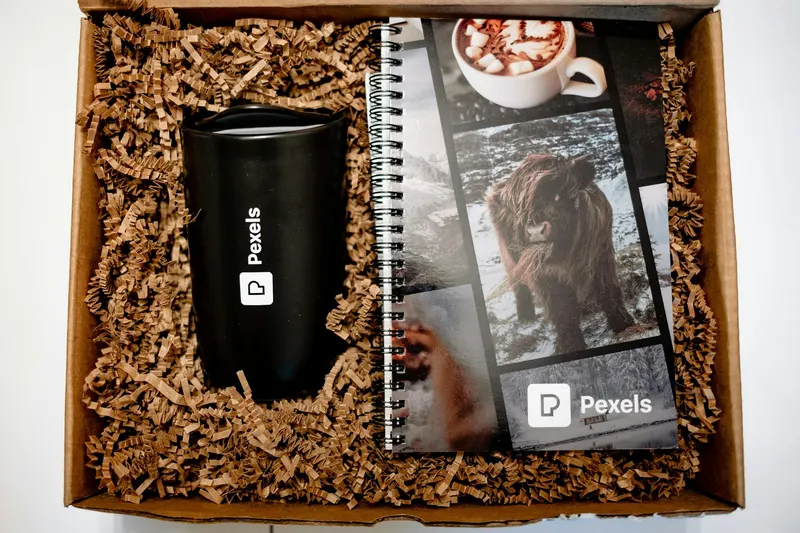
For gift-boxed items or corporate hampers, recycled cardboard boxes, seed paper tissue, and kraft paper fill are all readily available alternatives to conventional packaging. Some suppliers will also offer unboxing-ready packaging designed for sustainable gifting — worth asking about for client appreciation or end-of-year campaigns.
Step 7: Communicate the Sustainability Story to Your Recipients
This step is frequently skipped, and it’s a genuine missed opportunity. If your recipients don’t know the item they’re holding is made from 100% recycled ocean-bound plastic, or that the notebook in their hands is FSC-certified, much of the goodwill you’ve invested in evaporates.
There are several practical ways to tell the story:
Include a small card or hang tag with a brief explanation of the material and why your brand chose it. Keep it concise — two or three sentences is enough.
Reference it in your email or event communications. If you’re distributing merch at a conference in Adelaide or a product launch in Perth, mention the sustainability credentials in your event briefing or MC script.
Use it on social media. A short post about your eco-friendly merchandise choice — particularly if it connects to a broader sustainability initiative — generates organic engagement and reinforces your brand values to a wider audience.
Common pitfall: Overclaiming. Don’t describe a product as “completely sustainable” or “zero impact” unless you have the certifications and data to back it up. Authenticity is far more powerful than hyperbole, and Australian audiences are increasingly good at spotting the difference.
Step 8: Evaluate the Result and Refine for Next Time
After your first eco-friendly merch order, build in a simple review process before you order again.
Ask:
- Did recipients respond positively to the product? Did you receive any comments or questions about it?
- Was the quality what you expected? Did anything arrive below standard?
- Were the sustainability claims from your supplier backed up by what you received?
- Did the product suit the occasion and audience as well as you’d anticipated?
Even informal feedback from a handful of colleagues or clients gives you valuable data for your next order. Over time, you’ll build a go-to list of products, materials, and suppliers that reliably deliver — and your eco-friendly merch programme will become a genuine asset to your brand rather than a one-off experiment.
A Final Word on Getting Started
Choosing promotional items eco friendly in nature doesn’t require perfection on your first attempt. It requires intention. Start with a clear brief, ask the right questions, and resist the temptation to cut corners on certifications or supplier vetting. The Australian business community — from the startup ecosystems of inner-city Melbourne to the resource sector in Western Australia — is moving towards sustainability, and your branded merchandise can be a meaningful, visible part of that shift.
The steps above give you a repeatable framework. Use them, refine them, and let your merch do the talking.